
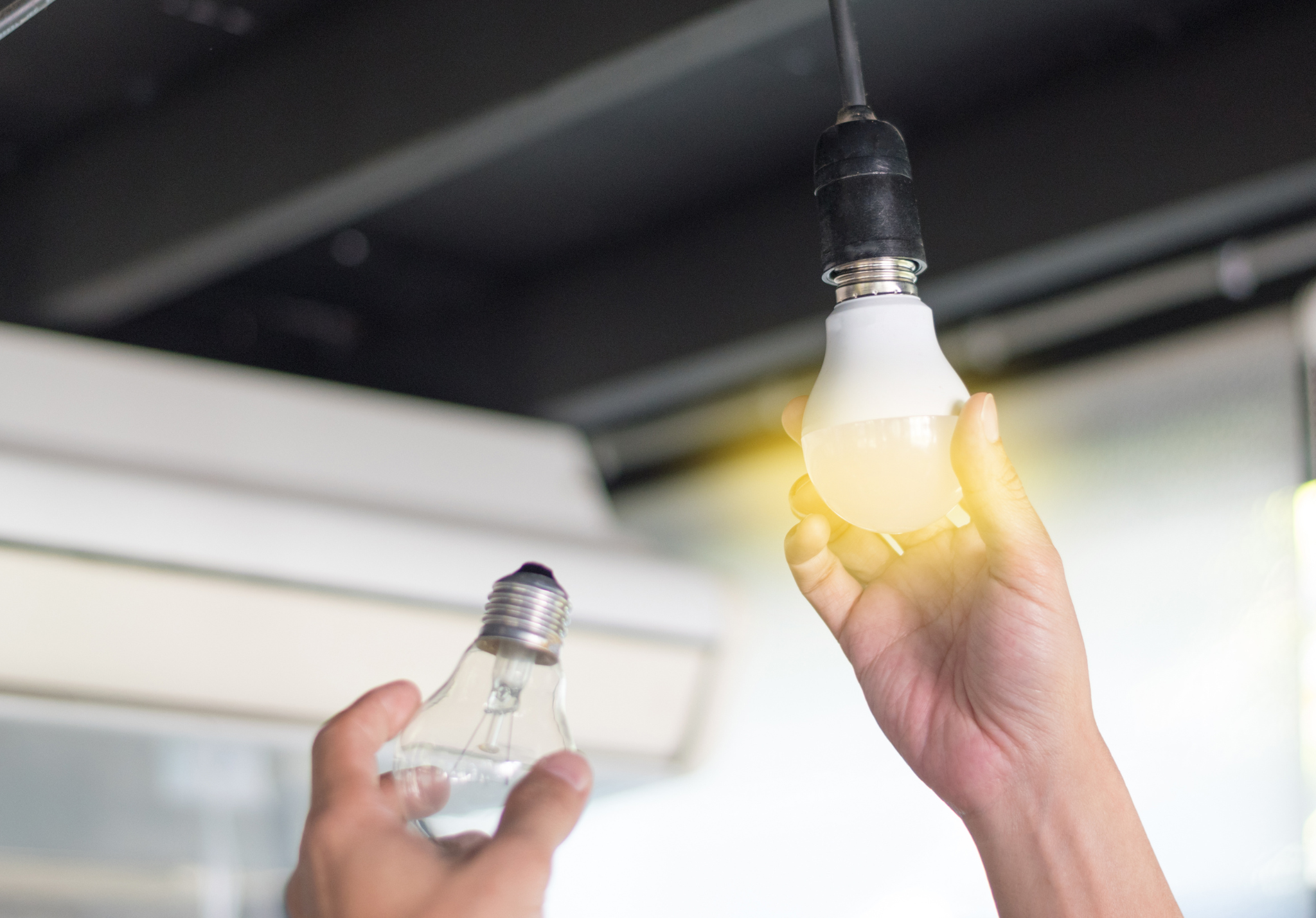
Commercial lighting has evolved significantly over the years. Nowadays, there are more options than ever before. From incandescent and fluorescent to LED, there’s no shortage of lighting solutions available. While traditional lighting systems have been servicing facilities for decades, LED technology has redefined performance and efficiency in commercial spaces. Read on for a comparison between the different traditional lighting solutions and LED, and how these technologies perform in today’s commercial environments.
Incandescent: The Classic Choice for Decades
Up until about the 1970s, incandescent lights were the gold standard for general lighting. Now, they’re largely phased out, including in commercial use. In fact, the U.S. Department of Energy began requiring lighting manufacturers to meet a new set of efficiency standards in 2023 that effectively banned incandescent bulbs altogether. However, they’re still being produced on a smaller scale than before for use in certain applications, like bug lights, appliance lights and floodlights.
Incandescent bulbs have a warm color tone, which, depending on your commercial application, can be a pro or a con. They have instant illumination, meaning they don’t need to “warm up” to reach full brightness, like some other types of traditional lighting solutions. While they have a low upfront cost, they’re extremely inefficient since they produce large amounts of heat, have short lifespans and require frequent replacements.
Halogen: A Brighter Take on Traditional
Halogen lights are a type of incandescent bulb that offer slightly better efficiency and color rendering. They’re commonly used in retail, hospitality and display lighting due to the improved brightness and color quality compared to incandescent bulbs. Because of their high color rendering index (CRI), they’re able to showcase the true color and look of the items they illuminate, making them ideal for display lighting in retail environments. While halogen lights are a brighter, improved take on regular incandescent bulbs, they still consume a fair amount of energy due to the amount of heat they produce and have shorter lifespans than the more modern options.
Fluorescent: A Step Toward Efficiency
In the 1980s and 1990s, fluorescent lights reached the peak of their popularity, becoming the standard in schools, office buildings and other commercial spaces. They were known for providing better light output than incandescent bulbs while reducing the amount of heat produced. They were also more energy-efficient and cost-effective.
The main issue with fluorescent lights, however, is that they contain toxic mercury, which creates a disposal hazard. The other downsides to fluorescent lights are that they have a warm-up time before they reach full brightness, they often flicker or buzz, and they can cause eye strain due to the harsh lighting they produce, which is especially true for older models with poor color rendering.
High-Intensity Discharge (HID): Brightness at a Cost
HID lighting is commonly used for outdoor and industrial lighting applications, like parking lots, warehouses and other large spaces, due to the very bright illumination it provides across wide areas. Not only is the light they produce brighter, but it’s also whiter than incandescent and halogen, which have more of a warm, yellow color temperature.
HIDs have slightly longer lifespans than incandescent or halogen bulbs, but still significantly less than LEDs. This also means they have to be replaced frequently. The main problems with HID light bulbs are that they have long warm-up times, generate large amounts of heat, consume a lot of energy and can cause glare. While they were once highly regarded for their performance in industrial and outdoor settings, they’re quickly being replaced by LEDs.
LED: The Modern Standard
LED lighting started becoming popular in the late 1990s and into the early 2000s, and it’s been gaining traction ever since. LED lighting is highly regarded for being the most advanced and efficient lighting option on the market for commercial and industrial environments. These bulbs offer instant illumination, bright and even light output, and a variety of color temperatures.
LEDs are durable and extremely easy to maintain. With their 50,000+ hour lifespans, they help facility managers save on maintenance and replacement costs. As the more eco-friendly option, LEDs are mercury-free, recyclable and energy-efficient, helping businesses lower their carbon footprint and achieve their sustainability goals. LED lights are also versatile, available in a variety of fixtures, as well as CCT and wattage options.
The Clear Winner? LED!
While traditional lighting options once met the needs of commercial facilities, they’re being slowly phased out in favor of the more modern, innovative solution, LED. With higher energy efficiency, better light output and consistency, and longer lifespans, LED technology outperforms traditional lighting solutions in every category. Not to mention that LEDs are also by far the most cost-effective commercial lighting solution on the market. When running a facility, operational efficiency, cost savings and sustainability are key to long-term success—and LED offers them all.
As the commercial lighting landscape evolves, LED lighting solutions continue to be the clear choice for facilities across industries. Ready to switch to LED? Explore our product line or contact your supplier to get started with Commercial LED.
 800-494-0670
 PO Box 668755
 800-494-0670