
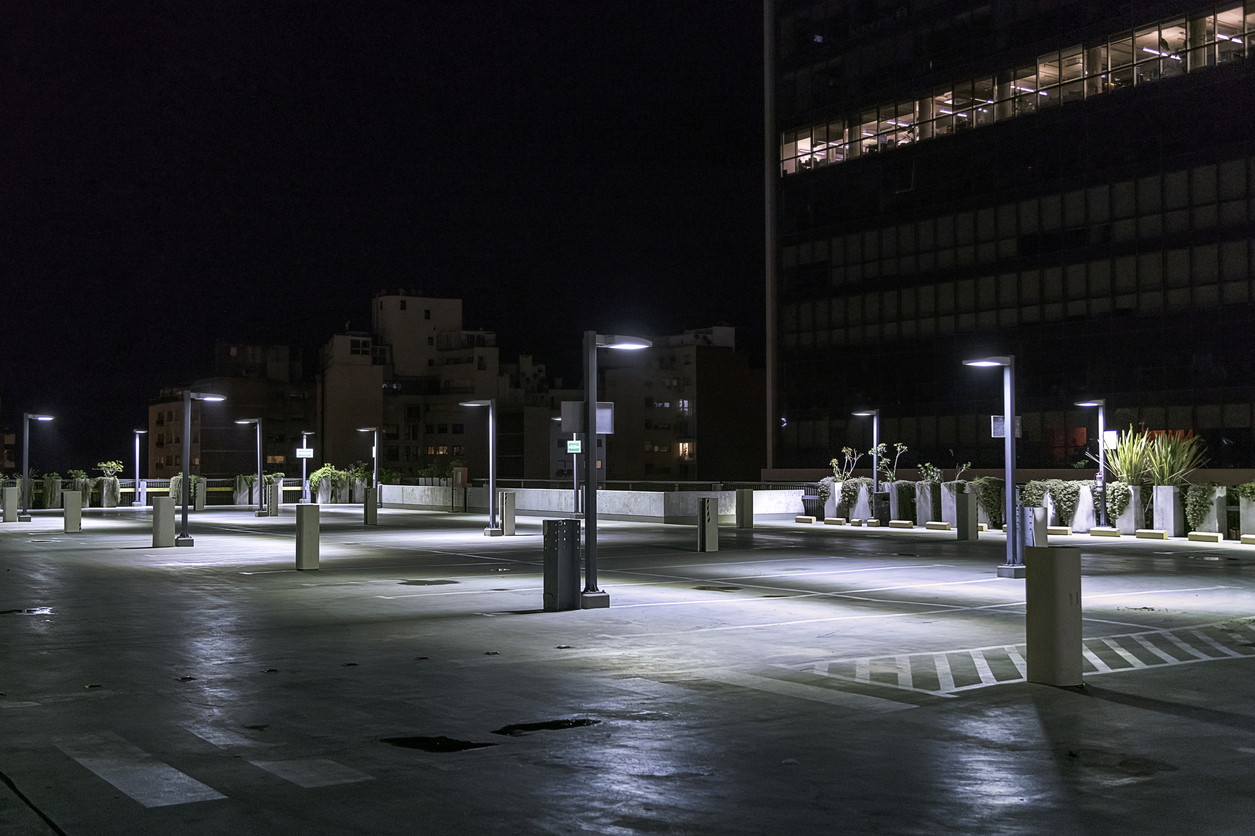
We’re moving into the time of year with longer nights and more hours of darkness, making security a greater concern for commercial businesses. From vandalism and theft to accidents and liability issues, commercial properties are always facing various security risks. Lighting is one of the strongest ways to protect against these threats. Read on to learn about the role of industrial lighting in keeping commercial properties safe after dark.
The Basics of Security Lighting
At its core, security lighting is a first line of defense, protecting people, property and assets. Alongside security personnel and cameras, lighting plays a crucial role in a business’s security strategy. Effective perimeter illumination reduces shadows and ensures visibility. Placement, intensity and overall lighting design all factor into how effective security lighting will be in keeping a commercial property safe and protected.
Deterring Threats
One of the most important and most commonly understood functions of security lighting is deterring threats. A brightly lit property discourages criminal activity, such as trespassing, theft and vandalism, by eliminating dark spots and making it more difficult for intruders to approach. Features like motion sensors add a level of unpredictability, further deterring unwanted activity on commercial properties.
Supporting Surveillance
Security cameras are only as effective as the lighting that supports them. CCTVs that record dark areas fail to provide a clear picture, making it difficult, or even impossible, to identify activities or individuals in crucial situations. Consistent, high-quality illumination allows surveillance cameras to capture sharp, detailed footage that can be used for monitoring or evidence if needed. Beyond video quality, security personnel also benefit from effective security lighting, as they have better visibility when monitoring the perimeter.
Enhancing Safety and Reducing Liability
Security isn’t just about protecting property—it’s also about protecting people. Slips, trips and falls are far more likely to happen in dim, poorly illuminated areas. Well-lit walkways and parking areas enhance visibility and reduce the risk of these accidents. The fact that security lighting is a deterrent to criminal activity also directly correlates to the safety of employees and visitors. Maximizing industrial lighting design shows a reasonable effort to enhance safety and create a secure environment, which helps businesses reduce liability risks.
Types of Security Lighting
Different types of security lighting serve various purposes, and many commercial properties use a combination of a few to create a strategic system. Floodlights are by far the most commonly used fixtures in security lighting systems, but other types of fixtures, like wall packs, are used in tandem to maximize effectiveness. Here are a few types of security lighting configurations:
- Continuous Lighting: Provides consistent, steady lighting for perimeter parking areas, ensuring constant visibility throughout the night.
- Standby Lighting: Remains off until motion-activated by sensors or timers, saving energy while still providing immediate light when activity is detected.
- Emergency Lighting: Keeps critical lights on during power outages and emergencies, ensuring the continued safety and security when regular power is unavailable.
From increasing efficiency and boosting workplace productivity to ensuring safety and security, industrial lighting wears many hats. Now that the nights are getting longer, it’s time to make sure your security lighting design is strategic and effective. There’s no better way than by investing in superior LED lighting products from Commercial LED, a trusted manufacturer of industrial LED lighting solutions. We use over three decades of industry experience to design high-performance, innovative LED lighting solutions that will strengthen the security of your commercial property for years to come. Shop our expansive product line here or contact your distributor to get started with our products.
 800-494-0670
 PO Box 668755
 800-494-0670